In the history of electrical engineering, only a few research endeavors have matched the scale and ambition of Nikola Tesla’s high-voltage investigations. Moving from desktop prototypes to massive open-air facilities, Tesla sought to understand how electrical energy could be manipulated and transmitted through space without traditional physical conductors. And it’s essential to examine the core objectives, processes, and results of his primary experimental milestones: the development of the initial Tesla coil and the subsequent Colorado Springs experiment.
Purpose and Objectives of the Research
At the close of the nineteenth century, conventional electrical distribution systems relied heavily on low-frequency, low-voltage copper wire networks that suffered from severe energy attenuation over distance. The primary scientific objective of Tesla’s high-voltage research was to determine whether electrical power could be sent across vast distances without resistive wire losses.
Tesla hypothesized that the Earth and its upper atmosphere possessed specific conductive properties capable of supporting electrical resonance. By generating extremely high voltages at high frequencies, he intended to test whether energy could be injected directly into the terrestrial globe as a stationary wave, establishing a global wireless transmission network.
The Tesla Coil Experiment Process
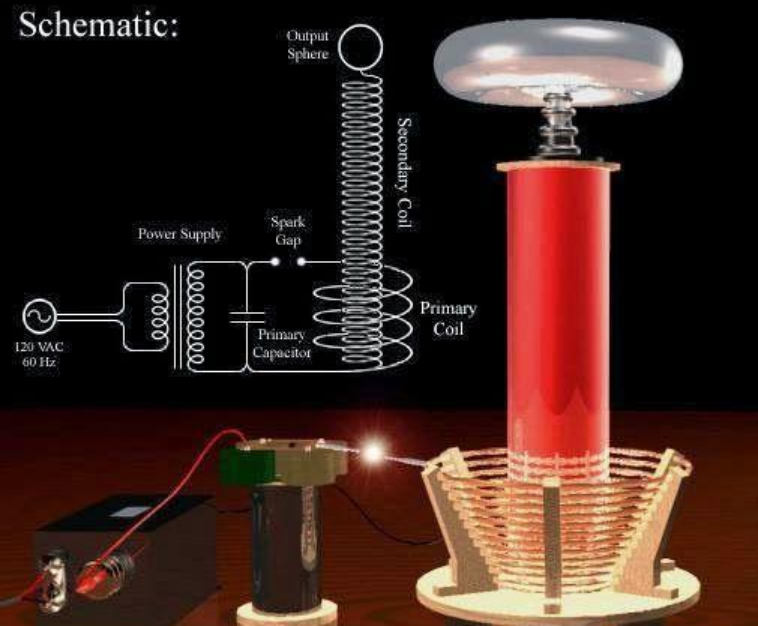
The foundational phase of this research began in New York, where Tesla designed and patented the Tesla coil in 1891. This apparatus served as an air-core resonant transformer circuit engineered to produce high-voltage, low-current, and high-frequency alternating current. By carefully balancing the inductance and capacitance of the system, you can achieve precise frequency tuning.
The system utilized a power source connected to a primary circuit containing a capacitor and a spark gap. When the capacitor charged to a specific threshold, it discharged across the spark gap, creating a high-frequency oscillatory current in the primary coil. This current was magnetically coupled to a multi-turn secondary coil. Because the electrical parameters were tuned to achieve resonance between the primary and secondary circuits, the device stepped up voltage exponentially. This controlled process allowed researchers to study high-frequency electrical fields and spark discharges in a controlled lab environment.
The Colorado Springs Facility Experiment Process
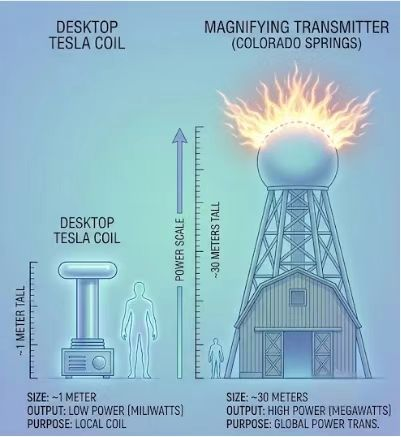
To test whether these resonant principles could be scaled to macro-environmental levels, Tesla relocated his operations to Colorado Springs in May 1899. The objective was to construct a significantly larger, high-voltage apparatus capable of interacting with the Earth’s natural electrical charge.
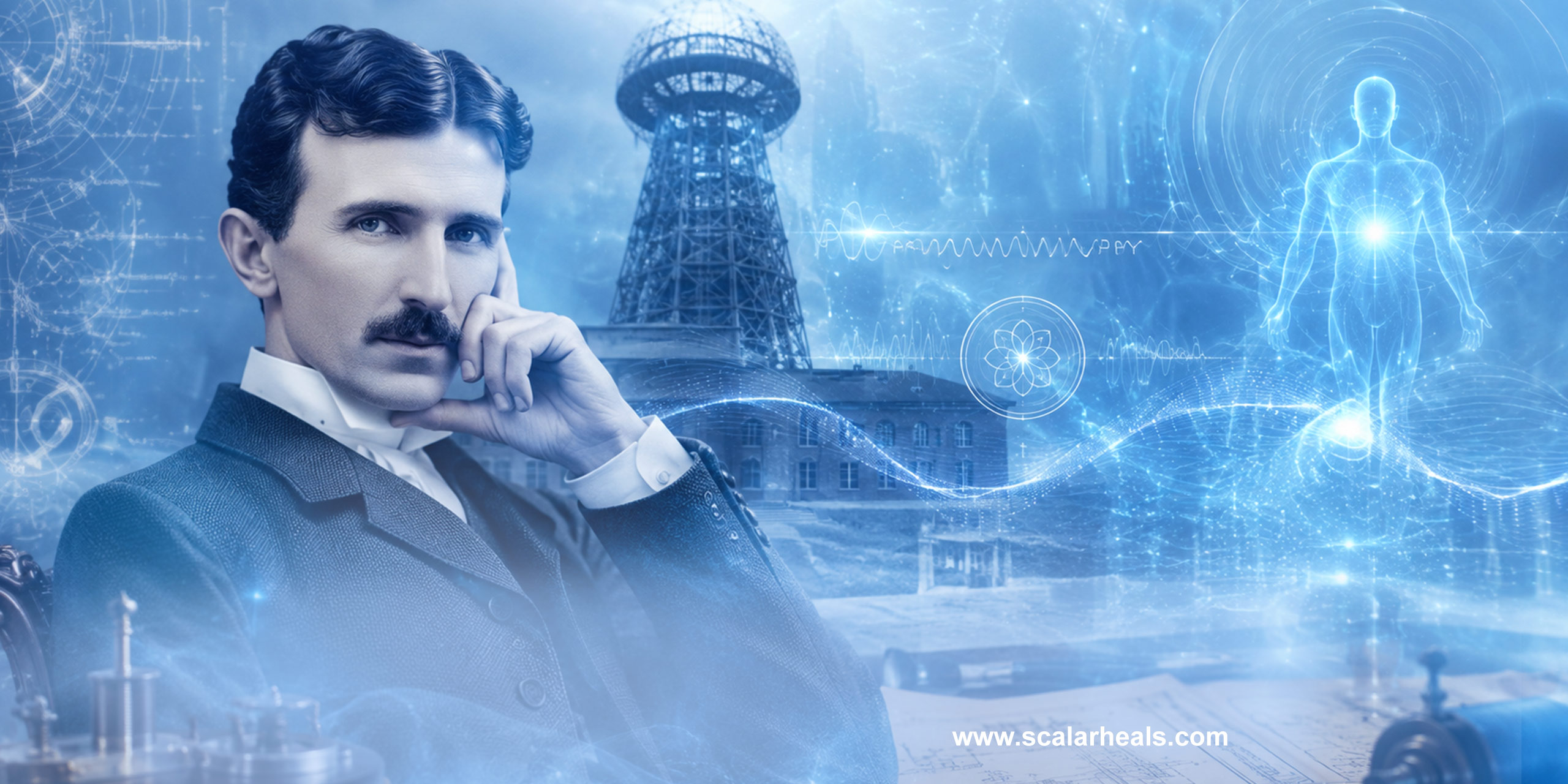
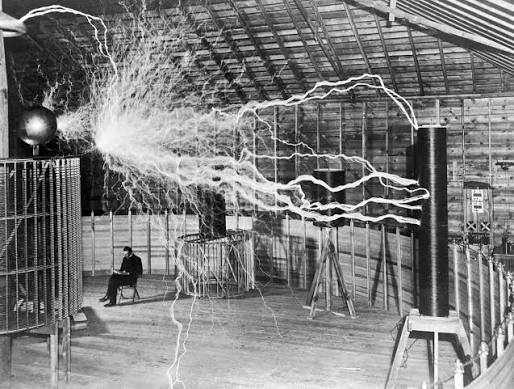
In a large wooden experimental station, Tesla built a giant magnifying transmitter, an enlarged, three-coil variation of his original transformer. The facility featured a 142-foot metal mast extending through the roof, topped by a large copper sphere. The system was powered by a local electrical utility, feeding massive amounts of current into the primary circuits to produce potential differences measured in millions of volts.
During operation, the high voltage Tesla machine subjected the surrounding atmosphere to intense electrical stress, creating localized ionized pathways and massive artificial discharges.
The Results and Findings
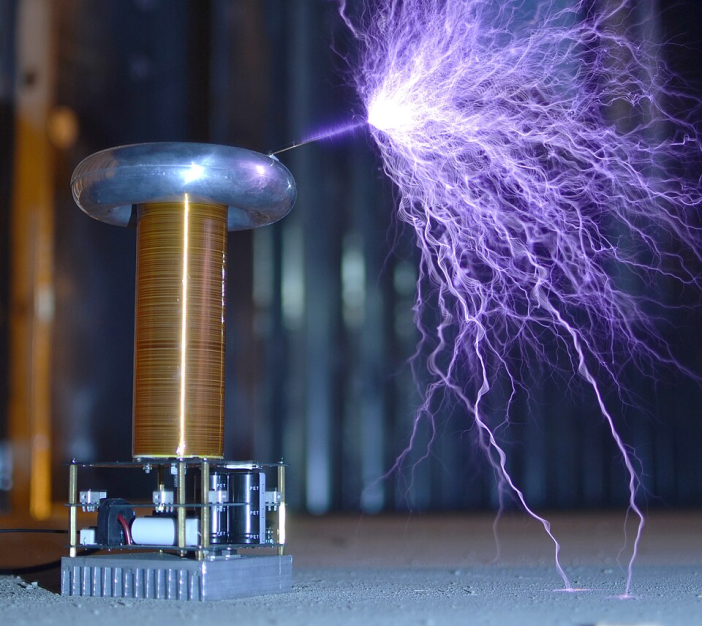
The Colorado Springs testing phase yielded several notable Results. First, the station successfully produced artificial lightning arcs exceeding 100 feet in length, generating thunderous acoustic shockwaves audible for miles around.
Second, and more importantly regarding wave mechanics, Tesla documented the presence of stationary electrical waves within the Earth. By monitoring sensitive telephonic receivers and ground-connection instruments positioned away from the station, he observed that electrical impulses introduced into the ground reflected and interfered to form standing waves. In field tests, the system successfully illuminated incandescent lamps located at a distance without any physical wire connections, verifying that energy could be propagated through resonant terrestrial circuits. However, the experiments also underscored the immense financial and technical challenges associated with maintaining constant power regulation on a continental scale, concluding the active testing phase at that site.
Through these rigorous large-scale investigations, the high-voltage machinery established foundational empirical data regarding high-frequency resonance and wave propagation that continue to inform electrical physics today. And these two phenomenal experiments are the foundation of understanding the concept of scalar energy when looking back, which is why Tesla is recognized and known as the father of scalar energy.