The market for home scalar devices has grown considerably over the past decade. What was once limited to a handful of specialist products aimed at early adopters in the frequency healing community now spans a range of systems at different price points, with different theoretical frameworks behind them and different levels of documentation and community support. For someone trying to make an informed purchasing decision, the landscape can be confusing.
This article maps the current home scalar machine market as clearly and honestly as possible, covering the main system types, their key features, their verified prices, and the factors that matter when comparing them. All prices and specifications in this article have been verified against current manufacturer sources at time of writing.
Part 1 — Two Distinct Types of Home Scalar System
Two-coil interference field systems
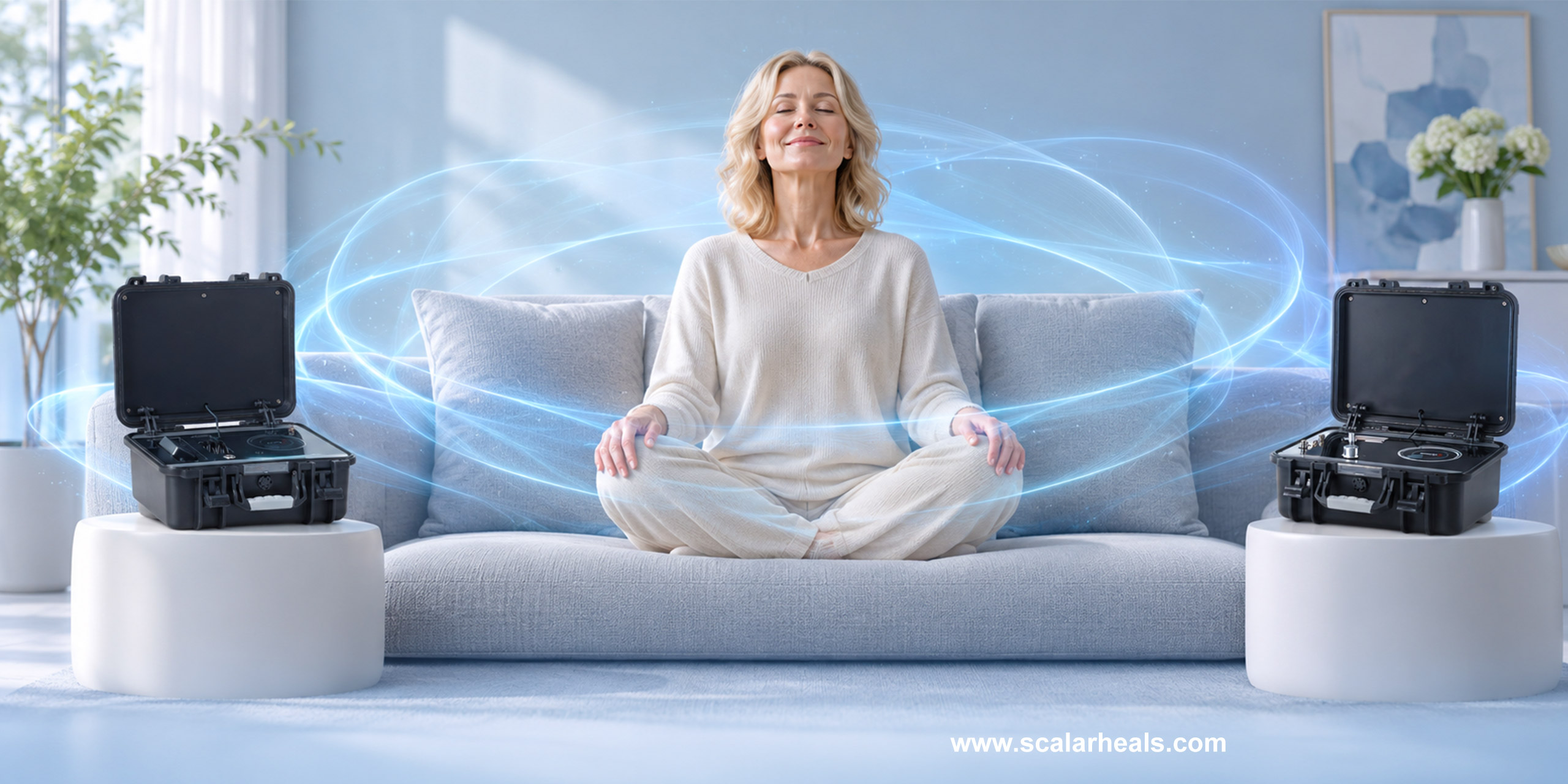
The first category generates a scalar field through the opposing-coil architecture described throughout this series: a Transmitter coil and a Receiver coil placed facing each other, tuned to resonance, creating an interference field in the space between them. The user sits or lies within this field. Spooky2 Scalar is the most technically developed example in this category, and it remains the system with the largest documented practitioner community and the most detailed operational protocols [1].
These systems require a physical space for setup, typically at least two meters of clear distance between the coils, and they are designed for stationary use. They are home systems in the fullest sense: set up in a dedicated space and used in the same location for sessions of meaningful duration.
Portable scalar field emitters
The second category generates a scalar field from a single compact device carried on or near the body. The Aha Halo, developed by Aha Harmony, is the leading example in this category. It generates a scalar field extending approximately one meter (three feet) in all directions from the device and carries a library of over 200 programs. Unlike the two-coil systems, it requires no setup, no dedicated space, and no session time: it operates continuously throughout the day [2].
These two categories serve different use cases. The two-coil system offers a deeper, more configurable scalar field environment for dedicated sessions. The portable emitter offers continuous ambient field exposure without any session structure. Many advanced practitioners use both.
Part 2 — The Main Systems on the Market
Spooky2 Scalar
Price: USD 1,600 to 1,769 for the standard unit. The GX Pro Essential Kit (scalar unit plus GeneratorX Pro generator) is USD 2,288 to 2,457. A 13th Anniversary edition is available at USD 1,455 to 1,608 [1].
Spooky2 Scalar is the most technically documented two-coil scalar system currently available for home use. Official specifications: frequency range 1.00 MHz to 8.00 MHz, frequency step size 50 kHz, scalar flow 30mA, each coil unit measuring 170mm H x 360mm W x 290mm D. The system supports four operational modes: Pure Scalar, Molecular Scalar, Rife Scalar, and Scalar Harmony. With a GeneratorX Pro, it gives access to over 90,000 frequency programs and biofeedback scanning via the optional Scalar Digitizer [1].
Suitable for: people who want a full-featured home scalar system with maximum configurability, Rife frequency access, and strong community support. Requires engagement with the Spooky2 software ecosystem and a meaningful learning curve.
EESystem and EEQube
Price: center-based sessions typically USD 50 per hour. The EEQube home unit is USD 14,995. Full EESystem installations start at USD 28,000 for a 4-unit system and scale to USD 250,000 for a 48-unit commercial installation [3].
The EESystem uses arrays of custom computer screens to generate what its developer Dr. Sandra Rose Michael describes as a bio-scalar field combining scalar waves and photon collision technology. The EEQube is a miniaturized home version weighing 80 lbs (36 kg), measuring 21 inches high by 25.5 inches deep, drawing 110W, and designed for room use rather than a large center installation. It produces approximately one third the scalar energy of a standard 4-unit EESystem. Center sessions remain the most widely accessible format [3].
Suitable for: people wanting a premium center-based scalar experience, or those with significant budget for a home installation. The EEQube is the most accessible home option from this range.
Aha Halo
Price: USD 599 to 639 [2].
The Aha Halo is a palm-sized portable scalar emitter weighing 105 grams and measuring 10cm x 5cm x 2cm. It generates a scalar field extending approximately one meter in all directions. It carries a library of over 200 programs across multiple wellness categories. The device stores up to 50 programs for standalone operation and arrives with 30 preloaded programs ready to use out of the box. Battery is 2,000 mAh designed for all-day use. Program updates require a computer connection [2].
Suitable for: people who want continuous ambient scalar field exposure throughout daily life, those who travel frequently, and those looking for a portable companion to a Spooky2 Scalar home setup.
Scalar Light
Price: subscription-based, typically USD 15 to 40 per month [4].
Scalar Light operates as a remote scalar service rather than a physical home device. Users submit a photograph which the service uses as a connection point for remote sessions. No hardware is required. The mechanism described is among the more speculative in the scalar field and differs from the coil-based or device-based approaches described above [4].
Suitable for: people who want to explore scalar healing concepts at very low financial commitment without purchasing any hardware.
Part 3 — Side-by-Side Comparison
The table below compares the four main systems across the factors most relevant to a home purchasing decision. All prices and specifications are verified from current manufacturer sources and are approximate; confirm current pricing directly with the manufacturer before purchasing.
| Feature | Spooky2 Scalar | EESystem / EEQube | Aha Halo | Scalar Light |
|---|---|---|---|---|
| Hardware configuration | Two coil units (Transmitter + Receiver), each 170mm H x 360mm W x 290mm D; optional GeneratorX Pro for Rife Scalar mode; optional Scalar Digitizer for biofeedback | EESystem: arrays of 4 to 48 custom computer screen towers, center/clinic installation. EEQube: single cube unit 21in H x 25.5in D, 80 lbs, for home or smaller room use | Single palm-sized unit; 10cm x 5cm x 2cm; 105g; USB-C charging; no additional hardware required | No hardware; software-based remote service; photograph submitted as session connection point |
| Physical footprint | Requires minimum 2m clear space between coils; each unit roughly 36cm wide; dedicated room or area needed | EESystem: large dedicated room installation. EEQube: compact for a room; 80 lbs, semi-portable; benefits require same-room proximity for photon component | Negligible; carried in pocket, bag, or worn throughout daily life | None; fully digital service accessed via account login |
| Frequency range / output | Scalar resonance: 1.00 MHz to 8.00 MHz range; 50 kHz step size; 30mA scalar flow; tuning typically 5.5 to 7 MHz; analog circuitry for pure signal | EESystem: proprietary bio-scalar plus photon field; 120V, 90W per unit; laser-calibrated. EEQube: 120V, 110W, fanless; approx. 1/3 scalar output of 4-unit EESystem | Scalar field radius approx. 1 meter (3 feet) in all directions; 200+ frequency programs; 2,000 mAh battery | Remote scalar service; technical output parameters not publicly disclosed |
| Program control | Full access to Spooky2 database of 90,000+ programs via Windows software; 4 operational modes (Pure, Molecular, Rife, Harmony); biofeedback scanning with Scalar Digitizer + GX Pro | EESystem/EEQube: fixed programs set by manufacturer; no user program selection. Center staff manage programming | Stores up to 50 programs; 30 preloaded at purchase; 200+ available via Windows/Mac software update; standalone operation without computer after loading | Rotating program sets determined by service; limited user customization options |
| Setup complexity | Medium-High: software installation, tuning procedure, protocol selection; strong community documentation and certified trainers available | EESystem: professional installation and calibration by manufacturer. EEQube: self-assembly; no calibration required; plug in and place in room | Very Low: charge device, select program from preloaded list, carry or place near body | Very Low: account creation and photograph submission only |
| Session format | Dedicated sessions; user sits or lies between coils; sessions run from 30 minutes to overnight; runs during sleep | EESystem: center sessions 1 to 4+ hours; reclining in room. EEQube: continuous room ambient exposure; user remains in same room for full photon benefit | Continuous all-day ambient field exposure; no dedicated session time required; operates independently once program is selected | Background remote sessions running continuously per subscription; no time commitment from user |
| Ongoing costs | No subscription after hardware purchase; software and program database updates free; optional GX Pro generator approx. USD 900+; optional Scalar Digitizer USD 38 | Center: per-session fees USD 50/hr typical. EEQube: no ongoing subscription after USD 14,995 purchase; calibration not required | No subscription; program library updates included free for life; one-time hardware purchase | Monthly subscription USD 15 to 40; no hardware cost |
| Community and support | Largest scalar healing user community globally; tens of thousands of active users; free courses, certified trainers, regular program updates, active forums | Growing center network globally; official support from manufacturer; EEQube has smaller home user community | Growing community within Spooky2 and Aha Harmony ecosystem; manufacturer support; benefits from Spooky2 community overlap | Established subscriber base; primarily service-provider communication rather than open peer community |
| Verified price (approx.) | Scalar unit: USD 1,600 to 1,769. GX Pro Essential Kit: USD 2,288 to 2,457. 13th Anniversary edition: USD 1,455 to 1,608 | EESystem: USD 28,000 (4-unit) to USD 250,000 (48-unit). EEQube home unit: USD 14,995. Center sessions: approx. USD 50/hr | USD 599 to 639 | USD 15 to 40/month subscription |
| Best suited for | Home users and practitioners wanting maximum configurability, full Rife frequency access, biofeedback capability, and community-supported protocols; willing to invest time in learning the system | Those wanting a premium immersive center experience; or high-budget home users. EEQube for those wanting a simpler home installation without the Spooky2 ecosystem | Daily lifestyle users; frequent travelers; Spooky2 Scalar users wanting between-session portable support; beginners seeking a lower-complexity entry point | People wanting the lowest-cost way to explore scalar concepts with zero hardware investment |
Note: All prices are approximate and based on publicly available manufacturer information at time of writing. Prices change and bundle configurations vary. Always confirm current pricing directly with the manufacturer or authorised reseller before purchasing.
Part 4 — Key Factors Beyond the Specifications
Technical complexity and actual usage
The most sophisticated scalar device produces no benefit if its learning curve means it rarely gets used. Spooky2 Scalar offers more capability than any other home system at its price point, but that capability requires genuine engagement with the software and protocols. Someone who realistically will not invest time in that learning is better served by a simpler device used consistently than a sophisticated system used rarely.
Community as practical infrastructure
The Spooky2 community is one of the most significant practical advantages of the Spooky2 Scalar system. Tens of thousands of active users sharing protocols, troubleshooting problems, and documenting observations represents a kind of collective intelligence that a closed proprietary ecosystem cannot replicate. For new users, that community substantially reduces the effective learning curve.
Price and value
Price in the scalar device market does not reliably correlate with validated effectiveness. The most useful question is not how much a device costs but what is being received for the investment: documentation quality, community support, program access, verified specifications, and theoretical grounding all matter more than a high price point alone [5].
The most important factor in any home scalar device purchase is not which device is theoretically most powerful. It is which device you will actually use consistently. A simpler system used daily for three months will almost certainly produce more observable results than a sophisticated system used twice because the learning curve felt overwhelming. Honest self-assessment of your technical appetite and lifestyle fit matters more than specifications.
Resources:
- [1] Spooky2 Scalar. (2026). Spooky2 Scalar product page and specifications.
- [2] Aha Harmony. (2026). Aha Halo product page and specifications.
- [3] EESystem. (2026). EESystem and EEQube pricing and specifications.
- [4] Scalar Light. (2026). About Scalar Light Sessions.
- [5] Oschman, J. L. (2000). Energy Medicine: The Scientific Basis. Churchill Livingstone.